
Defining ourselves as kayakers
Serious leisure

Not too many of you will probably have heard of Robert A. Stebbins, Professor Emeritus of Sociology, University of Calgary. In 1982 he published the basic concept of serious leisure. He is the author of 66 books on various aspects of leisure and has delivered keynote addresses throughout the world. What interests me though, is the concept of serious leisure and how it has helped define us as sea kayakers. My thoughts below are based on my thinking about non-professional kayakers, people who are involved in paddle sports as a hobby.
There are six components of serious leisure, and these are
1.) Perseverance. They have committed to the activity over long period of time, even when things haven’t been going too well, injuries, work pressure etc. It is also likely that naturally occurring obstacles, getting older for example, aren’t going to stop them.
In many ways it doesn’t matter at what age you start the journey to becoming identified as a kayaker, who is involved in serious leisure. The nature of sea kayaking is that it tends to attract an older demographic, we are in effect ‘aqua ramblers”. Perhaps one of the most common phrases that you hear from the older paddlers is that “I wish I had started when I was younger”.
Sea kayaking, contrary to some aspects of social media, isn’t all about getting thrashed in large tidal races. For many people it’s about connecting with nature, exploring unique physical environments and sharing experiences with close friends. As we age these experiences are still available to us, but perhaps not necessarily at the same level.
Perseverance in the early years allows us to increase our skill level but as we get older it allows us to prolong our active paddling with all the recognized benefits to our physical and mental health plus our emotional well being.
2.) It’s a career. Not necessarily in the economic sense but in the idea of commitment, CPD and progression. Attending courses, gaining qualifications in personal skills, leadership and coaching. Making the progression from being a group member, to assistant leader to a fully qualified leader. It doesn’t stop there though. Gaining experience and qualifications in local waters, for example, Jersey but then spreading your geographical wings. Organising groups to Morbihan or Scotland then perhaps Norway, Greenland or Baja and in so many instances in a voluntary capacity, the members of Clubs benefitting from the knowledge and experience of these committed individuals. The leaders don’t get paid but in every way, knowledge, leadership, equipment etc, they are behaving in a truly professional fashion.
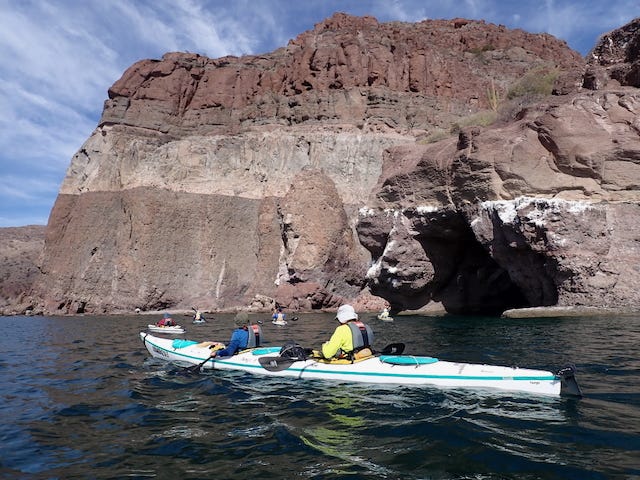
3.) Effort. People invest heavily in time and energy to acquire a range of skills and to maintain them. Rolling at the end of each session for example. Taking part in online learning to increase knowledge in a wide cross section of related subjects. Meteorology, navigation, fitness etc.
Going to the gym in the winter months, spending time on the rowing machine or in the pool to ensure that when the main paddling season kicks in you have the appropriate level of fitness from day one.
This learning is long term and continous, refreshing First Aid qualifications, is just one aspect of the commitment and effort, which is required by those paddlers who want to lead groups of other kayakers in their free time.
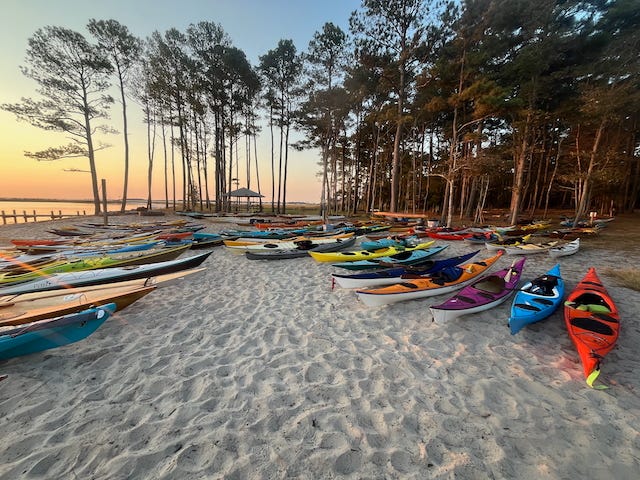
4.) Culture. There is a distinct ethos which also includes the use of language which outsiders may not understand. Technical words, Euro blades, spray deck, wet exit, hanging draw, whose meaning is probably not known by those individuals who aren’t members of this group.
Certain characteristic behaviours, for example, helping people to lift kayaks off cars. Helping people to carry kayaks to and from the water, even if we haven’t paddled ourselves. The understanding that we are responsible for each others safety whilst participating in the activity. This is the culture of the Club and this is transferred to other areas of our lives. After the paddle we go to the pub or cafe to continue the conversation, to review the day and to plan future adventures.
Even the shortest conversation will probably reference recently completed paddles or those which are due to take place. There is also a shared belief that if you going paddling, at some point, you will want to travel away from your home waters.
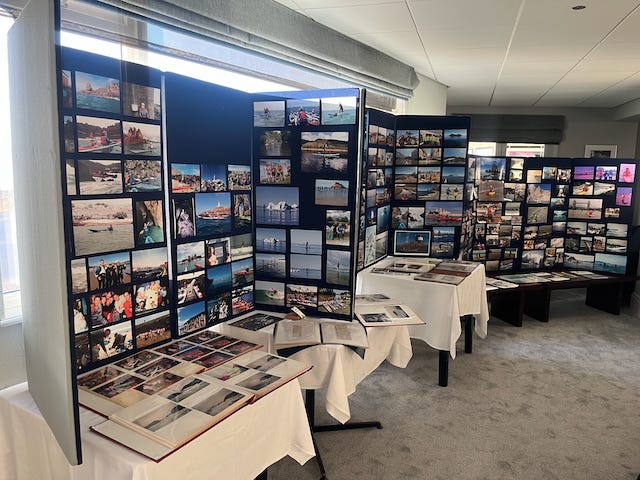
5.) Identity. How do we introduce ourselves? I am a father, grandfather, a geographer, a teacher, a Jersey person. I am all of those but normally introduce myself as a paddler (sea kayaker, canoeist, stand up paddle boarder etc).
This identity was crucial in allowing a really positive transition from my working life to retirement. This doesn’t just apply to me though, for so many other members of older generations, constructive use of leisure time is a key component to an enjoyable and satisfying retirement.
We also identify ourselves in the clothes we wear, whilst not actually kayaking, our fleeces, branded t shirts, down jackets in the winter all indicate our membership of an outdoor tribe
6.) Benefits. Identifying as a paddler gives me a reason to get up in the morning. It provides direction not just to my day but to the week and in broader sense my year. I meet with fellow paddlers on the water, in the cafe or in the street and often the conversation turns towards potential future trips. Morbihan in May, Greenland in July and August, Delmarva in October etc. If you are a sea kayaker who has retired from work your year can become focused around certain key dates and destinations.
Regular participation in sea kayaking has helped maintain a reasonable degree of fitness. With ageing comes less flexibility so I have used YouTube and physical classes to reduce the rate at which my body is rebelling against the physical demands made against it.
If you can identify some of these traits in your personality, behaviour, attitudes etc then it is probably because you are involved in serious leisure.